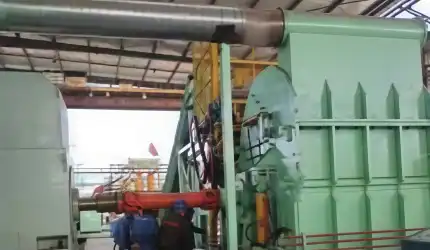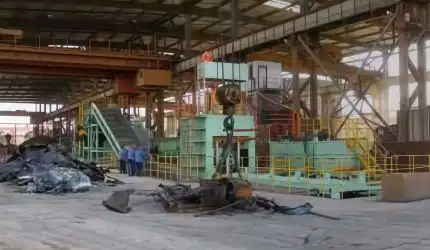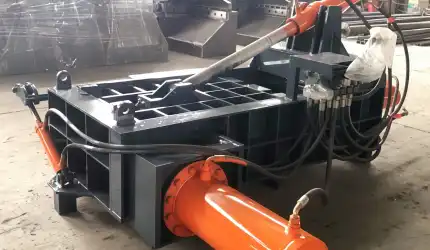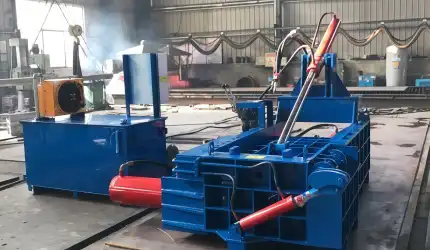
Scrap Crushers That Turn Junk Steel Into Furnace-Ready Feed
“High Density In, High Purity Out — Throughput From 5 to 15 t/h.“
Purpose-built for end-of-life cars, scrapped home appliances and light-and-thin scrap steel that mills refuse to melt as-is.
- Model Range: DJ-300, DJ-500 and DJ-800 — matched to your daily tonnage and yard space
- Rotor & Bearing: Heavy-duty rotor with cast-steel bearing housing for maximum radial strength
- Serviceability: Hydraulic self-opening body cuts downtime for blade and hammer maintenance
Dingjoin Scrap Crusher Machine For Sale
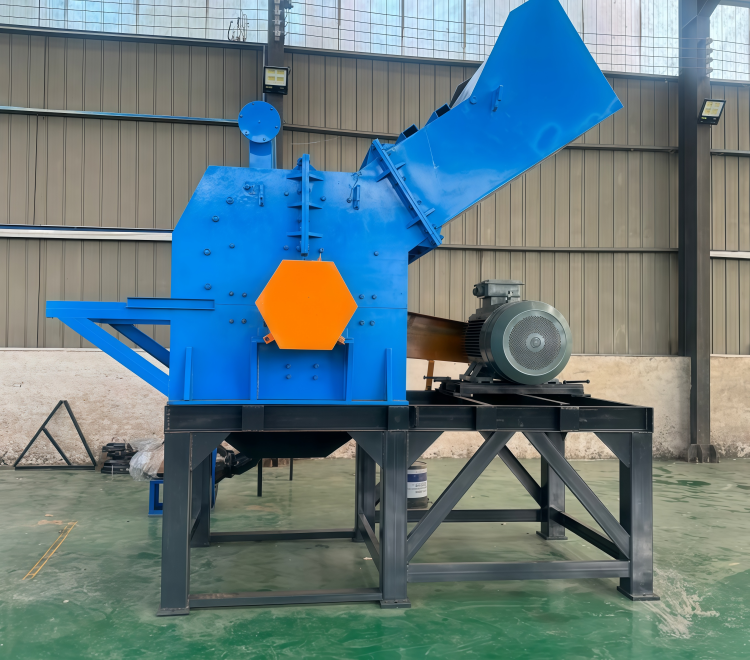
Compact-footprint scrap crusher for start-up yards and steady daily runs.
DJ-300 Scrap Crusher
Motor Power:
22 kW single drive
Output & Weight:
5–8 t/h, 15 t machine body
Applications:
Light-and-thin scrap, small appliance shells, bicycle frames, thin steel offcuts.
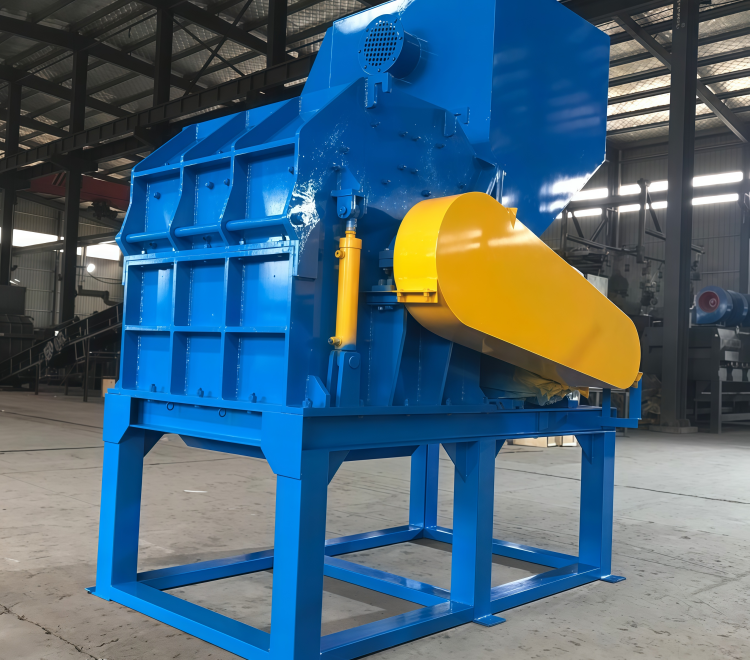
Dual-motor crusher that steps up throughput without enlarging the yard.
DJ-500 Scrap Crusher
Motor Power:
22 + 22 kW twin drive
Output & Weight:
7–10 t/h, 18 t machine body
Applications:
Mixed civil scrap steel, color-steel tiles, door-and-window metal, oxidized light scrap.
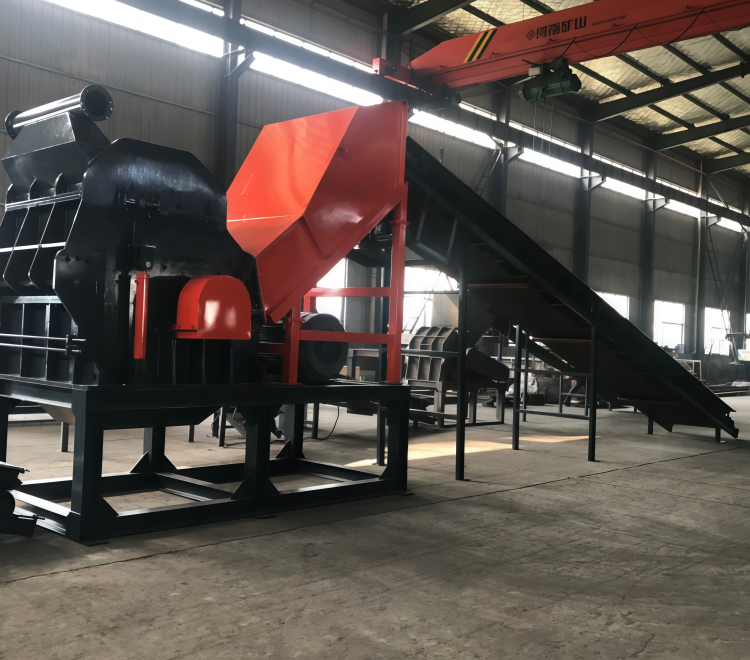
Heavy-feed crusher for scrap yards pushing volume and higher recovery.
DJ-800 Scrap Crusher
Motor Power:
30 + 30 kW twin drive
Output & Weight:
12–15 t/h, 20 t machine body
Applications:
End-of-life car bodies, bulk household appliances, heavier light-gauge scrap for remelting.
Dingjoin Scrap Crushing Line Solutions
Heavy-Duty Rotor A Rotor Mass That Refuses to Stall.
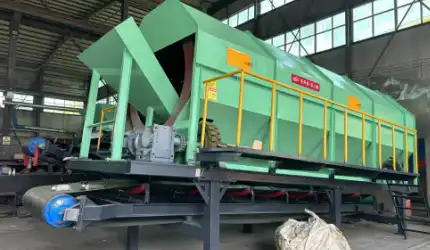
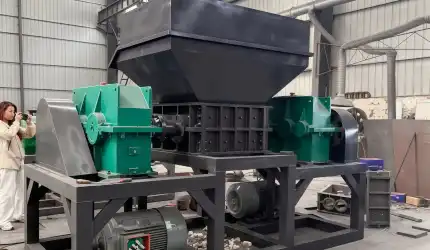
The core of every Dingjoin crusher is a heavy, high-inertia rotor paired with a deliberately wide feed throat, engineered so that bulky end-of-life car bodies and crushed appliance shells keep travelling through the chamber instead of choking the machine mid-cycle. That stored rotational energy is what carries the hammers through the toughest, densest pieces of scrap, and it is the reason the DJ-800 holds a steady 12–15 t/h rather than surging and stalling. The result is a crusher that runs at a predictable rhythm shift after shift, protecting both your throughput targets and your drive train from the shock of repeated jams.
Cast-Steel Bearing Seat Radial Strength Where the Load Really Lands.
Every impact inside the crushing chamber sends a violent radial force straight into the bearing housings, and this is exactly where cheaper fabricated seats begin to flex, crack and knock the rotor out of true. Dingjoin casts these housings in solid steel instead, dramatically raising the radial strength of the whole assembly and keeping the rotor precisely aligned through years of shock loading. Combined with a rigid, heavily ribbed frame, the machine keeps its geometry under continuous heavy feed, so bearing life stretches out and unplanned rebuilds become the exception rather than the routine.
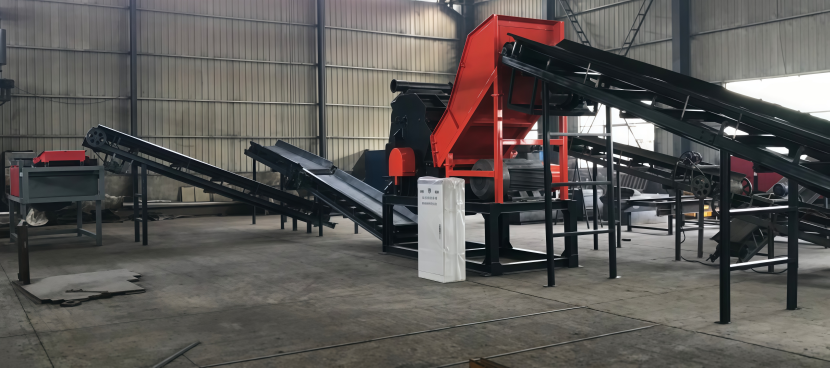
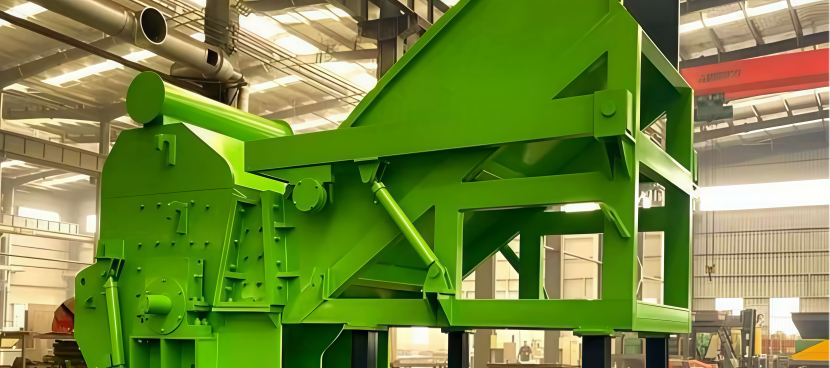
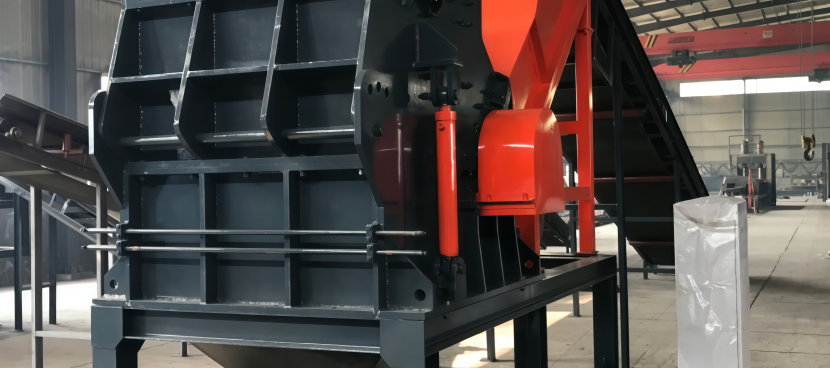
Hydraulic Self-Opening Open the Body, Not Your Schedule.
Maintenance access is designed into the machine from the start through a built-in hydraulic unpacking device that swings the entire chamber open in minutes. What used to mean an entire lost shift of manual unbolting to reach the hammers and liners now becomes a short, planned stop that a single operator can supervise. Because inspection is quick, wear parts get checked and swapped before they fail rather than after, which keeps output high, cuts emergency downtime and gives your maintenance team a safe, unobstructed working space around the rotor.
High-Purity Output Feed Your Furnace, Not Your Slag.
Crushed material leaves a Dingjoin machine dense, uniform and very nearly free of impurities, because the crushing action also loosens dirt, coatings and non-metallics that are then carried off by the downstream sorting stages. For a steel mill this is money: clean, high-density feed remelts at low unit energy with higher yield and far less slag, which is precisely why processed crushed scrap consistently outsells loose, light, un-crushed steel. The better the fragmentation, the higher the added value you can recover from every incoming ton of civil scrap.
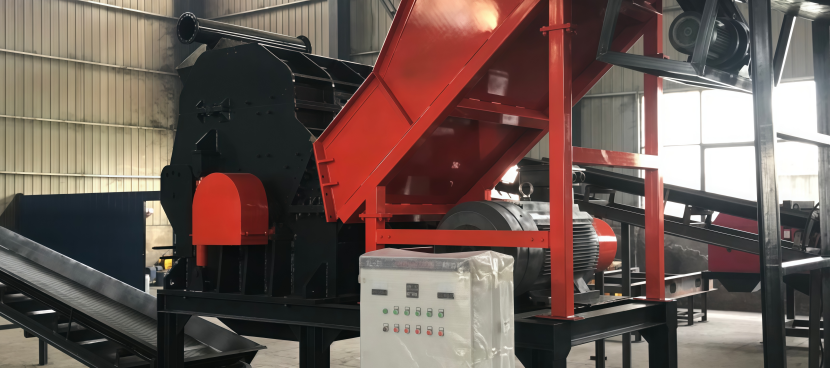
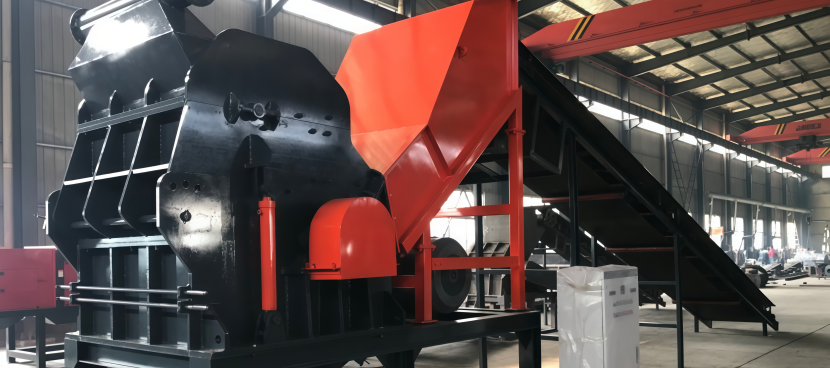
Modular Line Build One Base, Many Configurations.
Crushing, screening and sorting are laid out as modular stages, so the line can be extended or tuned to your tonnage instead of forcing your yard around a fixed layout. A start-up operation can begin with the crusher alone and add magnetic separation, air sorting or eddy-current recovery as volumes grow, all without tearing out and rebuilding the original footprint. This staged, expandable design lets you match capital spend to real demand today while keeping a clear, low-friction path to a fully integrated recovery line tomorrow.
Dingjoin Scrap Crushing Line Solutions
Heavy-Duty Rotor
Heavy-Duty Rotor A Rotor Mass That Refuses to Stall.
The core of every Dingjoin crusher is a heavy, high-inertia rotor paired with a deliberately wide feed throat, engineered so that bulky end-of-life car bodies and crushed appliance shells keep travelling through the chamber instead of choking the machine mid-cycle. That stored rotational energy is what carries the hammers through the toughest, densest pieces of scrap, and it is the reason the DJ-800 holds a steady 12–15 t/h rather than surging and stalling. The result is a crusher that runs at a predictable rhythm shift after shift, protecting both your throughput targets and your drive train from the shock of repeated jams.
Cast-Steel Bearing Seat
Cast-Steel Bearing Seat Radial Strength Where the Load Really Lands.
Every impact inside the crushing chamber sends a violent radial force straight into the bearing housings, and this is exactly where cheaper fabricated seats begin to flex, crack and knock the rotor out of true. Dingjoin casts these housings in solid steel instead, dramatically raising the radial strength of the whole assembly and keeping the rotor precisely aligned through years of shock loading. Combined with a rigid, heavily ribbed frame, the machine keeps its geometry under continuous heavy feed, so bearing life stretches out and unplanned rebuilds become the exception rather than the routine.
Hydraulic Self-Opening
Hydraulic Self-Opening Open the Body, Not Your Schedule.
Maintenance access is designed into the machine from the start through a built-in hydraulic unpacking device that swings the entire chamber open in minutes. What used to mean an entire lost shift of manual unbolting to reach the hammers and liners now becomes a short, planned stop that a single operator can supervise. Because inspection is quick, wear parts get checked and swapped before they fail rather than after, which keeps output high, cuts emergency downtime and gives your maintenance team a safe, unobstructed working space around the rotor.
High-Purity Output
High-Purity Output Feed Your Furnace, Not Your Slag.
Crushed material leaves a Dingjoin machine dense, uniform and very nearly free of impurities, because the crushing action also loosens dirt, coatings and non-metallics that are then carried off by the downstream sorting stages. For a steel mill this is money: clean, high-density feed remelts at low unit energy with higher yield and far less slag, which is precisely why processed crushed scrap consistently outsells loose, light, un-crushed steel. The better the fragmentation, the higher the added value you can recover from every incoming ton of civil scrap.
Modular Line Build
Modular Line Build One Base, Many Configurations.
Crushing, screening and sorting are laid out as modular stages, so the line can be extended or tuned to your tonnage instead of forcing your yard around a fixed layout. A start-up operation can begin with the crusher alone and add magnetic separation, air sorting or eddy-current recovery as volumes grow, all without tearing out and rebuilding the original footprint. This staged, expandable design lets you match capital spend to real demand today while keeping a clear, low-friction path to a fully integrated recovery line tomorrow.
What Our Scrap Crushers Process

End-of-Life Vehicle Bodies (ELVs)
Whole scrap car and light-truck shells, doors and body panels. Loaded in by grab or excavator, they are torn into dense, uniform fragments in a single pass — no torch pre-cutting and no extra crew. Best matched to our high-throughput DJ-800 for yards pushing 12–15 t/h.
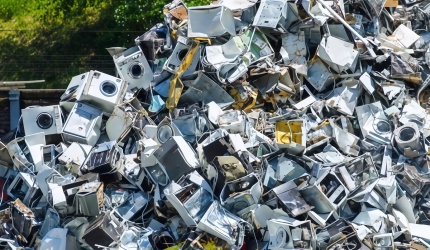
Household Appliances & White Goods
Washing machines, air-conditioner casings and gutted refrigerator shells full of mixed steel, plastic and coatings. The wide feed throat swallows bulky items whole, while the crushing action loosens non-metallics for the downstream sorting stages to carry off cleanly.
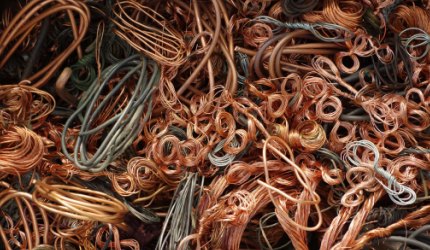
Light-and-Thin Civil Scrap
Color-steel tiles, door-and-window metal, bicycle frames and oxidized thin-gauge steel — the low-grade material that mills refuse as-is. Crushing lifts its density and purity so it remelts at low unit energy, turning cheap loose scrap into higher-value feed.
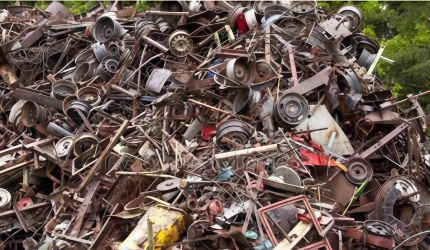
Mixed Civil Scrap Steel
Everyday collected ferrous scrap of uneven quality and complex composition. The heavy rotor keeps a steady rhythm through this inconsistent mix without stalling, delivering clean, high-density fragments ready for impurity removal, de-rusting and sorting.
Specifications of Metal Scrap Crusher
| Models | Power(kW) | Capacity(t/h) | Dimensions(mm) | Feeder Dimensions(mm) | Weight(t) |
| DJ-300 | 22 | 5-8 | 4200*3300*3500 | 1300*1500 | 15 |
| DJ-500 | 22+22 | 7-10 | 5160*3660*3800 | 1500*1800 | 18 |
| DJ-800 | 30+30 | 12-15 | 5500*3800*4200 | 1600*1900 | 20 |
Dingjoin Scrap Crusher Prices & ROI Analysis
Factory-Direct Pricing Structure
Skip the resellers and trading agents that inflate equipment cost. Because Dingjoin casts, machines and welds the core components in-house — the heavy rotor, the cast-steel bearing seats and the crushing chamber — you buy at the true factory price, typically well below what a middleman quotes for comparable output.
- Entry Series (DJ-300): 22 kW single drive, 5–8 t/h — lowest entry price for start-up yards and steady daily runs.
- Production Series (DJ-500 / DJ-800): 44–60 kW twin drive, 7–15 t/h — higher throughput and density for yards pushing volume and higher recovery.
ROI Breakdown: How the Machine Pays for Itself
A scrap crusher is not a sunk cost — it is a margin engine. For a typical mid-sized yard, payback usually lands within 8 to 14 months. Here is where the return comes from.
A. Turn Low-Grade Scrap Into Premium Feed
Loose, dirty light scrap sells at the bottom of the market. Crushing lifts its density and strips impurities, so mills remelt it at low unit energy with higher yield — and pay a premium for clean, high-density fragments over raw mixed scrap.
B. Ship Weight, Not Air
Un-crushed appliance shells and car bodies haul mostly empty space. Crushed material loads far tighter, so you fit more tonnage on every truck, cut freight trips and lower logistics spend on the same volume.
Cost Comparison Table
Reference Scenario: processing roughly 1,000 tons of civil scrap per month.
| Cost Factor | Selling Loose Scrap | Selling Crushed Output | Your Advantage |
|---|---|---|---|
| Price paid by mills | Bottom-tier mixed-scrap rate | Premium clean-fragment rate | Higher margin on every ton |
| Density & freight | Low density, hauling air | Dense uniform fragments | Fewer trucks, lower fuel |
| Impurity level | Dirt, coatings, non-metals | Loosened and sorted out | Less slag, better mill terms |
| Downtime | Frequent manual clearing | Hydraulic self-opening body | Faster maintenance, more uptime |
Why Our Scrap Crusher Outlasts the Cheaper Alternatives
1. Cast-Steel Bearing Housings Radial Strength That Doesn’t Flex.
Every impact in a crusher sends violent radial force straight into the bearings. Where budget machines use fabricated, welded seats that eventually flex and crack under load, Dingjoin casts the bearing housings in solid steel. This keeps the heavy-duty rotor perfectly aligned through years of shock loading, preventing the catastrophic bearing failures that plague cheaper units.
2. High-Inertia Heavy Rotor Design Momentum That Punches Through Jams.
A lightweight rotor stalls the moment it hits a dense engine block or compressed car shell. Our crushers are built around a heavy, high-inertia rotor that stores massive rotational energy. That momentum carries the hammers through the toughest scrap, keeping the machine running at a steady 12–15 t/h rhythm instead of constantly surging, stalling, and burning out the drive.
3. Hydraulic Self-Opening Chamber Maintenance That Actually Gets Done.
When inspecting the hammers means an entire shift of manual unbolting, maintenance gets delayed—and delayed maintenance destroys machines. Dingjoin builds a hydraulic unpacking device into the frame that swings the chamber open in minutes. Because access is fast and safe, wear parts are checked and swapped before they fail, drastically extending the machine’s lifespan.
4. Modular, Expandable Architecture A Line That Grows, Not One You Throw Away.
Cheap crushers are often rigid, standalone boxes. Dingjoin designs the crushing, screening, and sorting stages as a modular system. As your yard’s tonnage grows or your output purity requirements tighten, you simply add magnetic or eddy-current modules to the existing line instead of tearing out the old machine and starting over.
Dingjoin vs. Generic Brands
| Feature | Our Scrap Crusher | Generic / Budget Brands |
|---|---|---|
| Bearing housings | Solid cast-steel, high radial strength | Welded plate, prone to flexing and cracking |
| Rotor design | Heavy, high-inertia, resists stalling | Lightweight, stalls on dense scrap |
| Maintenance access | Hydraulic self-opening chamber in minutes | Manual unbolting, costs a full shift |
| Output quality | High density, loosened impurities | Coarse fragments, dirt stays attached |
| System layout | Modular, expandable into a full sorting line | Fixed layout, hard to upgrade |
Where the Scrap Crusher Sits in Your Shredding Line — and Why It Decides Your Output Grade
The crusher is your line’s primary size-reduction and value-creation stage. Everything before it (shears, feed conveyors, grabs) exists to feed it; everything after it (magnetic drum, air separator, eddy current) exists to clean up what it produces. Get this stage wrong and the whole line underperforms.
- What feeds in: pre-cut car shells, appliances, and light-and-thin civil scrap sized to your model’s throat.
- What comes out: dense, liberated fragments where dirt, coatings and non-metallics are already broken loose — ready for sorting.
For buyers, the practical question is matching the crusher to your real daily tonnage, not the peak number on a spec sheet. If you process under 10 t/h, the DJ-300 or DJ-500 keeps capital and running cost low without starving the line; if you are pushing volume with heavy ELV bodies, the DJ-800’s 12–15 t/h and heavier rotor is what stops the bottleneck. A common and expensive mistake is buying an oversized separator behind an undersized crusher — the sorting kit sits idle. Size the crusher first, then build the line around its output rate. Skip or undersize this stage, and your mill-grade purity and your selling price both drop with it.
Our Metal Scrap Shredding Production line:

Pre-Shearing & Fine Crushing for Massive Bulk Waste.
Specifically designed for handling large-volume and bulky materials, this integrated line adopts an advanced combination of a multi-blade hydraulic shear and a heavy-duty scrap crusher. Large objects are first pre-sheared into manageable pieces and then continuously transported to the crushing and sorting line for fine processing. This system effectively multiplies your hourly output while drastically increasing the final material density.
Primary Shredding & Hammer Crushing for Mid-to-Large Solid Waste.
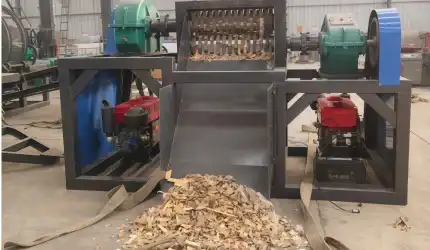
Engineered for mid-sized materials with large volumes, this production line uses a high-performance double shaft shredder (equipped with robust alloy blades) paired with a secondary hammer crusher. This dual-stage crushing, shredding, and screening setup provides a smooth, non-stop flow, ensuring even tough, hollow industrial plastics and light metal scrap are processed down to perfect sorting dimensions.
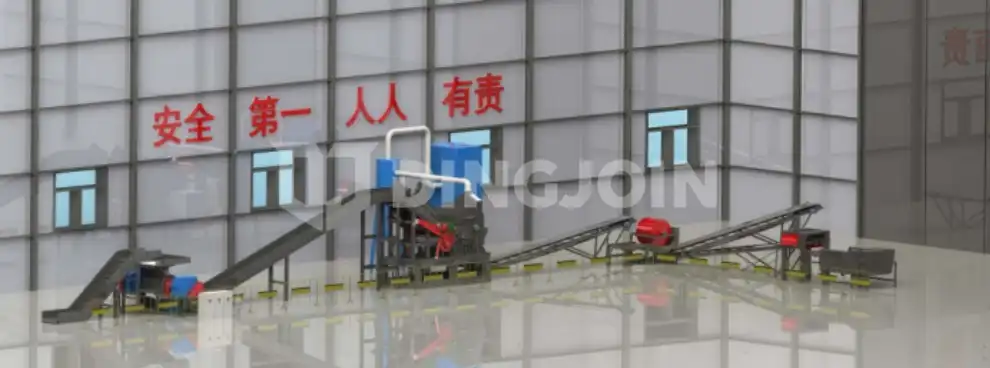
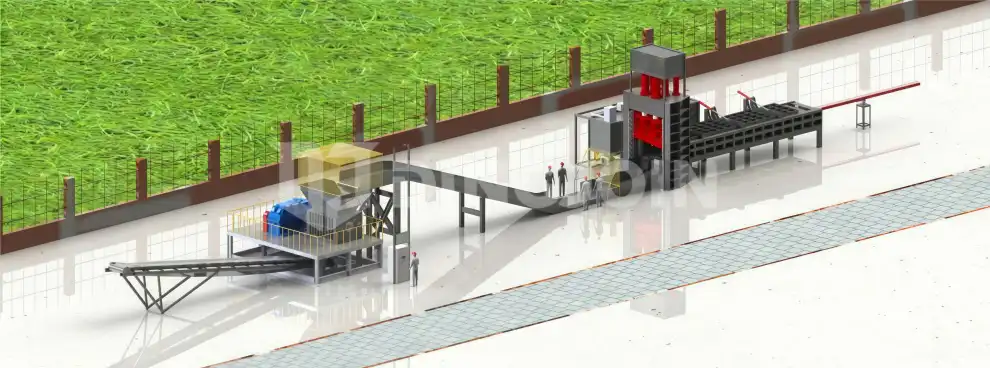
Continuous Shearing and Tearing for Disordered Rebar.
This specialized system completely replaces traditional, slow methods of processing long, tangled, bent, and bundled scrap reinforcement bars. The waste rebar is first fed into our high-force hydraulic shear to be processed into short, loose pieces, and then automatically transferred via conveyors to the sorting platform and heavy-duty rebar shredder for final, absolute size reduction.
Tower-Type Enclosed Processing with Zero Pollution.
Our advanced tower-type processing line offers a fully automated and eco-friendly system for recycling waste refrigerators and large home appliances (WEEE). By utilizing entirely physical sorting and dry crushing methods, this enclosed system produces zero hazardous gas, wastewater, or residue discharges, while achieving maximum separation rates of valuable ferrous and non-ferrous metals from plastics.
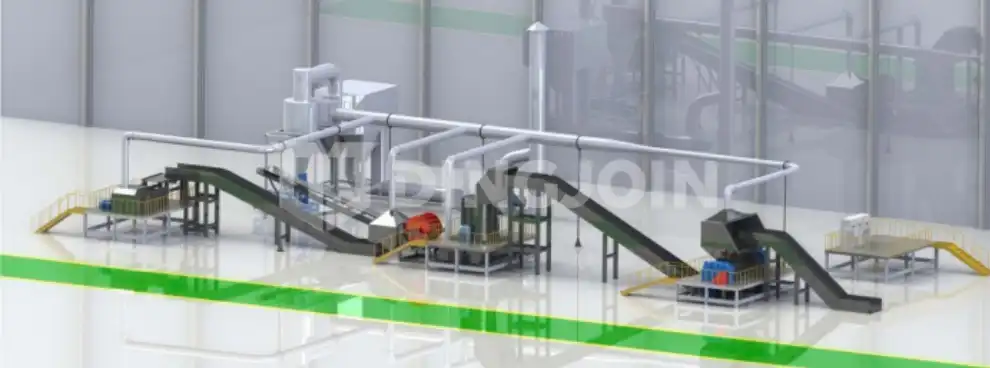
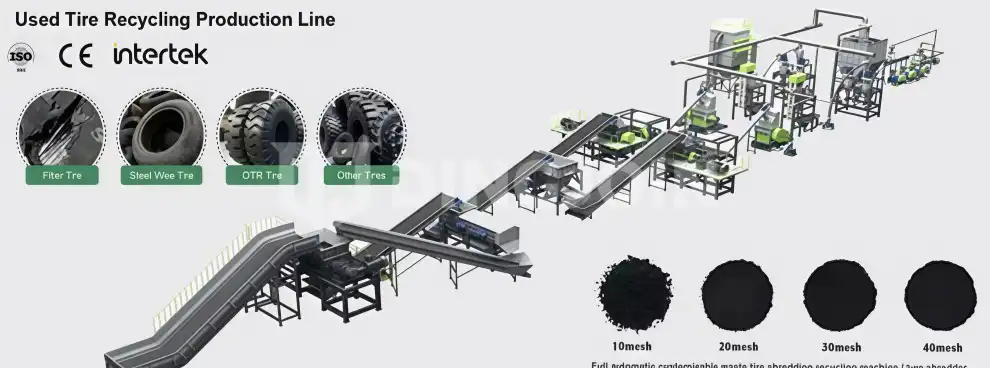
Complete Steel-Free Rubber Granules & Powder Production.
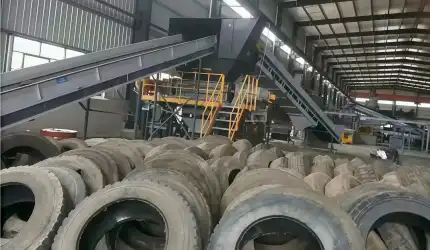
A highly automated, continuous recycling solution designed to process scrap passenger car, truck, and OTR tires into high-purity rubber granules and fine powder (ranging from 30 to 120 mesh). The system utilizes an advanced physical crushing and magnetic separation process to deliver final rubber products that are 100% free of steel wires and fibers.
Global Cases of Scrap Crusher Machines
Our scrap crushers are trusted by metal recycling yards, vehicle dismantling centers, and steel mills across multiple continents — from high-volume remelting operations to regional waste recovery facilities. Wherever low-grade, bulky civil scrap needs to be upgraded into dense, high-purity furnace feed, our heavy-duty rotors and self-opening chambers earn their place. Backed by factory-direct pricing, a full model range from the DJ-300 to the DJ-800, and dependable export packing and shipping support, buyers worldwide choose Dingjoin for consistent crushing performance that turns junk steel into a premium commodity.