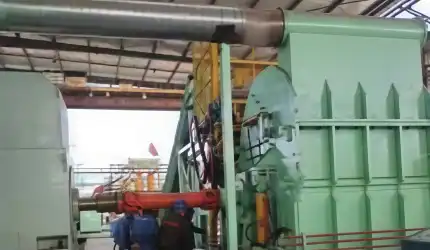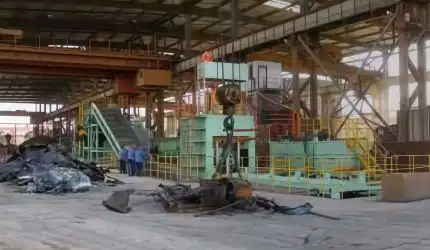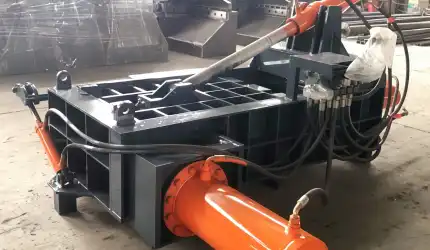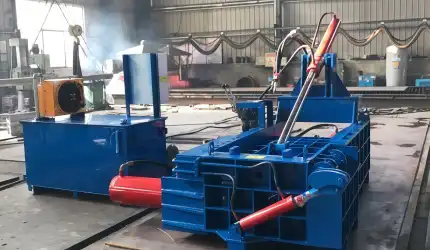
One-Station Gantry Shears for High-Volume Scrap Cutting
“Bite Through Anything — Shearing Force From 63 to 500 Tons.“
From tangled rebar and structural steel to whole car shells, sheared down to charge-ready lengths.
- Two Families, One Standard: Q91Y gantry line plus the DJ-EYJ crocodile shear, sized 63 t to 500 t
- Cast-Steel Shear Head: Three-face slide rails and quick, non-stop blade-gap adjustment
- Imported Brains: Schneider / Siemens components under single-station PLC control
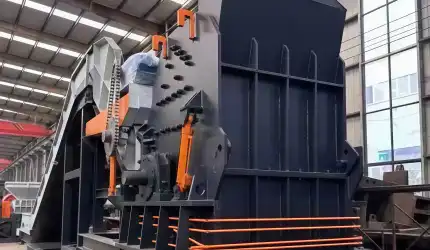
Dingjoin Metal Gantry Shear Machine For Sale
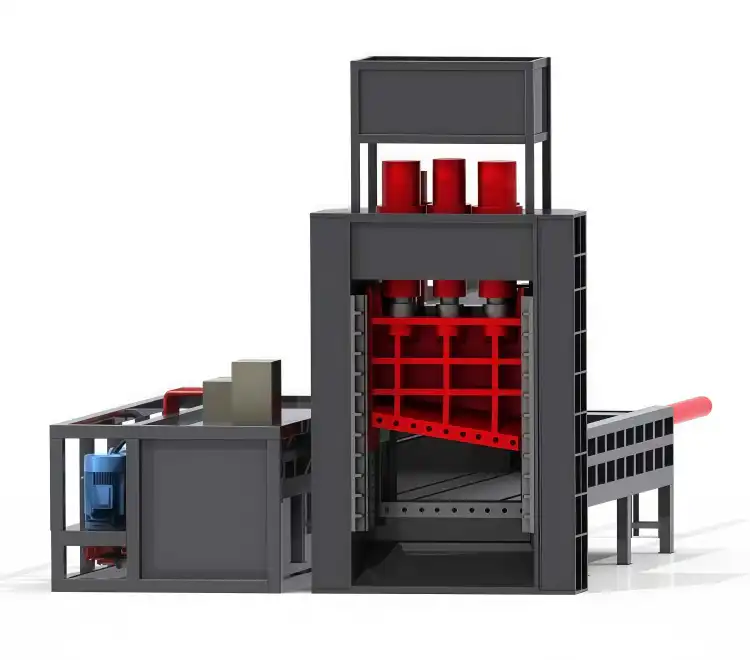
Full-size gantry shear that presses, holds and cuts bulky scrap unattended.
Q91Y Gantry Shear
Shear Width & Force:
Up to 3000 mm opening, ≤750 Mpa working pressure
Motor & Feed:
2×30 up to 6×90 kW, hydraulic cylinder / chain pushing
Applications:
Car shells, structural steel, section steel, low-carbon light and medium scrap.
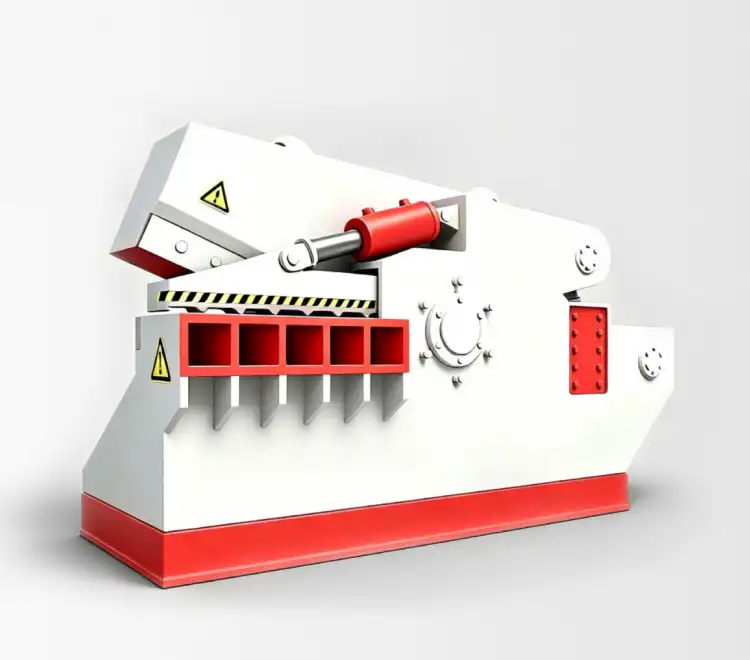
Jaw-action shear that bites through solids with a simple, low-fault build.
DJ-EYJ Crocodile Shear
Shearing Force:
63 t to 500 t across 9 sizes
Blade & Frequency:
600–1800 mm blade length, 8–16 cuts/min
Applications:
Rebar, round bar, pipes, plate offcuts, end-of-life vehicle dismantling scrap.
Dingjoin Gantry Shearing Machine Solutions
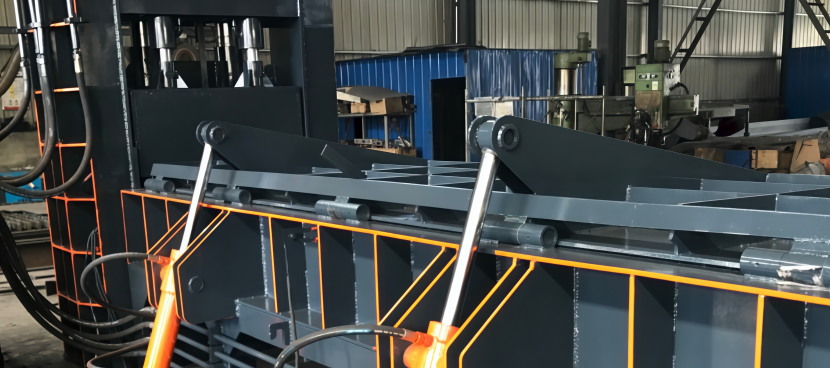
Cast-Steel Shear Head One-Piece Casting, Zero Compromise.
The shear head is cast as a single solid body rather than welded up from plate, and that one design decision defines how hard a gantry shear can bite. A cast head distributes the enormous cutting load evenly and resists the fatigue cracking that eventually opens up around the welds of lesser machines, so a Dingjoin shear keeps slicing through structural steel, section steel and whole car shells long after a fabricated head would have started to fail. It is the difference between a tool that survives years of full-tonnage duty and one that becomes a repair project.
Three-Face Slide Rails Guided on Three Sides for a Straighter Cut.
Instead of guiding the slider on two faces, Dingjoin runs it against three, and the extra contact surface transforms how the machine behaves under load. The added tensile resistance stops the slider from twisting or drifting when it meets an awkward, dense charge, keeping the blades perfectly parallel through the full stroke. The result is a cleaner shear line, less side loading on the cylinder, smoother travel and noticeably longer rail and blade life — all from the kind of structural detail that only shows its value after thousands of demanding cuts.
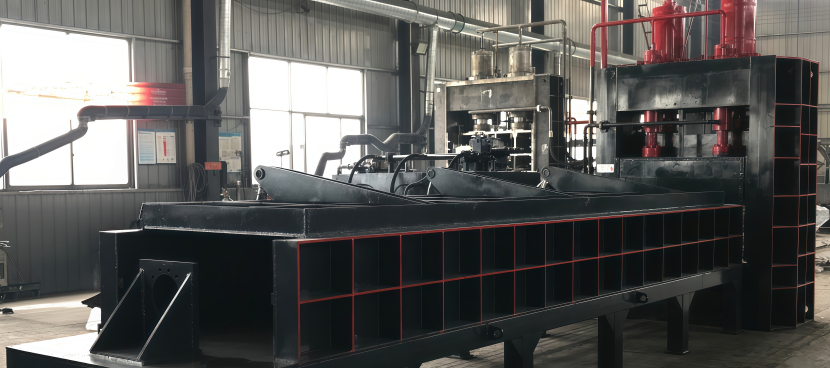
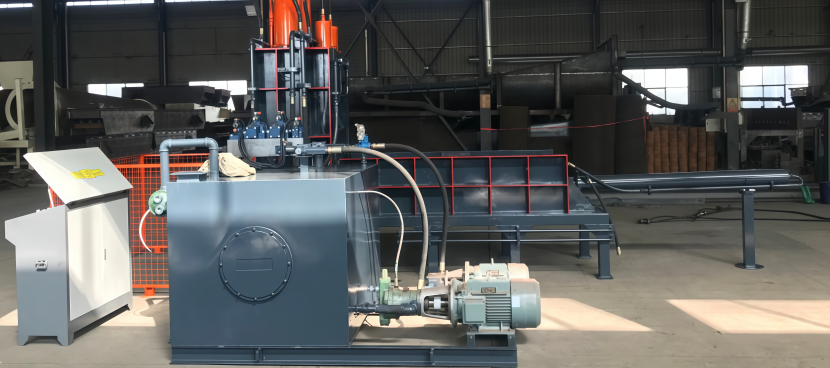
Encoder Auto-Stroke The Shear Thinks Before It Drops.
Encoder stroke self-detection technology continuously reads the real height of the material under the press head and automatically sets the slider opening to match it. Rather than driving the full stroke every single cycle, the shear travels only as far as the actual load requires, trimming away wasted empty movement. Over a full shift that reclaimed motion adds up to meaningfully faster cycles and lower hydraulic energy consumption, so the machine cuts more tonnes per hour while drawing less power — intelligence that pays for itself in both productivity and running cost.
Non-Stop Blade Gap Reset the Clearance Without Killing Power.
As the wear-resistant plates settle in over time, the blade gap naturally opens up, and on a conventional shear that means uncut strands, jammed material and hours lost to shutting down and re-shimming the rails. Dingjoin solves this by allowing the blade clearance to be readjusted while the machine stays in operation, ending the old trade-off between maintaining cut quality and losing production time. High-strength wear plates on the press device, side compression and pusher-box walls extend the service interval, and when adjustment is finally needed it no longer costs you a shift.
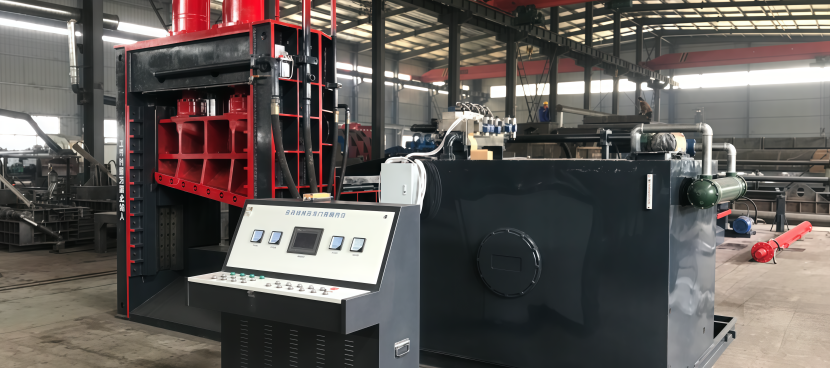
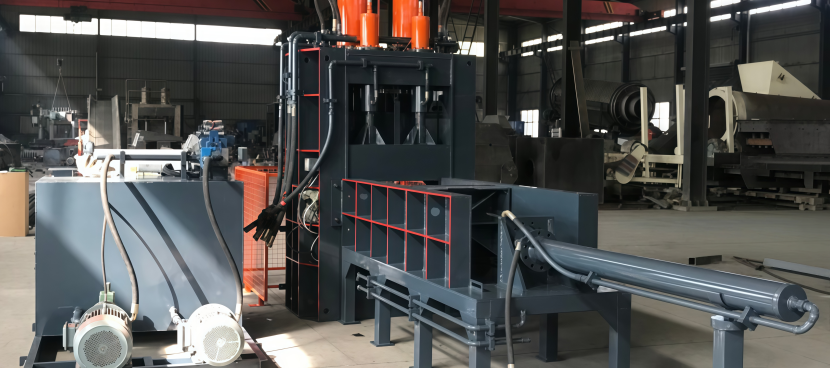
Schneider / Siemens PLC Imported Brains, Single-Station Control.
The electrical heart of the shear is built from imported Schneider (France) and Siemens (Germany) components, chosen for the reliability that a high-duty scrap yard demands. A single PLC coordinates the full pressing, feeding and shearing sequence so that one operator can run the entire cycle from a single station, watching live data on the touchscreen. The system carries strong self-diagnostics, displays and processes the status of every subsystem, and can even push operating data to a remote computer for off-site monitoring and troubleshooting.
Dingjoin Gantry Shearing Machine Solutions
Cast-Steel Shear Head
Cast-Steel Shear Head One-Piece Casting, Zero Compromise.
The shear head is cast as a single solid body rather than welded up from plate, and that one design decision defines how hard a gantry shear can bite. A cast head distributes the enormous cutting load evenly and resists the fatigue cracking that eventually opens up around the welds of lesser machines, so a Dingjoin shear keeps slicing through structural steel, section steel and whole car shells long after a fabricated head would have started to fail. It is the difference between a tool that survives years of full-tonnage duty and one that becomes a repair project.
Three-Face Slide Rails
Three-Face Slide Rails Guided on Three Sides for a Straighter Cut.
Instead of guiding the slider on two faces, Dingjoin runs it against three, and the extra contact surface transforms how the machine behaves under load. The added tensile resistance stops the slider from twisting or drifting when it meets an awkward, dense charge, keeping the blades perfectly parallel through the full stroke. The result is a cleaner shear line, less side loading on the cylinder, smoother travel and noticeably longer rail and blade life — all from the kind of structural detail that only shows its value after thousands of demanding cuts.
Encoder Auto-Stroke
Encoder Auto-Stroke The Shear Thinks Before It Drops.
Encoder stroke self-detection technology continuously reads the real height of the material under the press head and automatically sets the slider opening to match it. Rather than driving the full stroke every single cycle, the shear travels only as far as the actual load requires, trimming away wasted empty movement. Over a full shift that reclaimed motion adds up to meaningfully faster cycles and lower hydraulic energy consumption, so the machine cuts more tonnes per hour while drawing less power — intelligence that pays for itself in both productivity and running cost.
Non-Stop Blade Gap
Non-Stop Blade Gap Reset the Clearance Without Killing Power.
As the wear-resistant plates settle in over time, the blade gap naturally opens up, and on a conventional shear that means uncut strands, jammed material and hours lost to shutting down and re-shimming the rails. Dingjoin solves this by allowing the blade clearance to be readjusted while the machine stays in operation, ending the old trade-off between maintaining cut quality and losing production time. High-strength wear plates on the press device, side compression and pusher-box walls extend the service interval, and when adjustment is finally needed it no longer costs you a shift.
Schneider / Siemens PLC
Schneider / Siemens PLC Imported Brains, Single-Station Control.
The electrical heart of the shear is built from imported Schneider (France) and Siemens (Germany) components, chosen for the reliability that a high-duty scrap yard demands. A single PLC coordinates the full pressing, feeding and shearing sequence so that one operator can run the entire cycle from a single station, watching live data on the touchscreen. The system carries strong self-diagnostics, displays and processes the status of every subsystem, and can even push operating data to a remote computer for off-site monitoring and troubleshooting.
What Our Gantry Shears Cut

End-of-Life Vehicle Shells
Complete car and van bodies fed straight into the box. The press head compacts them, then the cast-steel head shears the shell down to short, charge-ready lengths — no manual holding, just continuous feeding at the shear’s own pace.
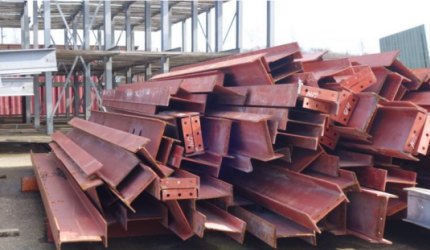
Structural & Section Steel
I-beams, channel, angle iron and heavy section offcuts from demolition and fabrication. With shearing force scaling to 500 t on the crocodile line and openings up to 3000 mm on the gantry line, dense structural steel is cut cold into uniform furnace charge.
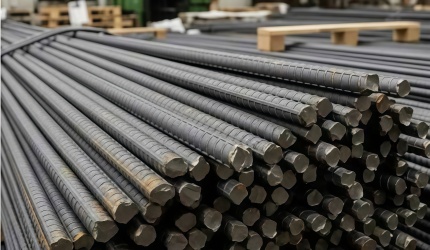
Rebar, Round Bar & Pipe
Tangled, bent and bundled rebar, round bar and pipe that jam lighter machines. The DJ-EYJ crocodile shear’s jaw action bites through these solids at 8–16 cuts per minute, sizing them cleanly for remelting or resale.
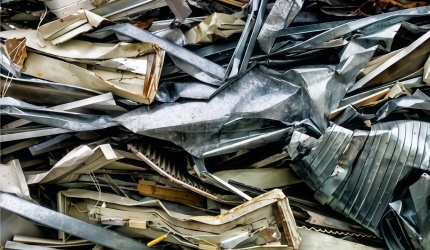
Low-Carbon Light & Medium Scrap
Profiles, thin-wall sections and packed light material that need compressing before cutting. Hydraulic drive gives reliable, repeatable strokes, turning loose low-carbon scrap into tidy, transport-friendly lengths that meet furnace-feed requirements.
Specifications of Metal Gantry Shear
Specifications of Gantry Shear
| Model | Shearing Force (t) | Processing Capacity (t/h) | Blade Edge Length (mm) | Shear Frequency (times/min) | Power (kW) |
|---|---|---|---|---|---|
| DJ‑LMJ‑315 | 315 | 3‑5 | 1200 | 2‑4 | 22×2 |
| DJ‑LMJ‑400 | 400 | 4‑7 | 1400 | 2‑4 | 37×2 |
| DJ‑LMJ‑500 | 500 | 5‑8 | 1500 | 2‑4 | 45×2 |
| DJ‑LMJ‑630 | 630 | 8‑10 | 1600 | 2‑4 | 45×3 |
| DJ‑LMJ‑800 | 800 | 12‑15 | 1800 | 2‑4 | 55×3 |
| DJ‑LMJ‑1000 | 1000 | 15‑20 | 2000 | 2‑4 | 55×4 |
| DJ‑LMJ‑1250 | 1250 | 20‑30 | 2500 | 2‑4 | 55×4 |
Specifications of Crocodile Shear
| Model | Shearing Force (t) | Material‑Pressing Force (t) | Blade Length (mm) | Opening (mm) | Shear Frequency (times/min) | Shear Specification (mm) | Motor Power (kW) |
|---|---|---|---|---|---|---|---|
| DJ‑EYJ‑63 | 63 | 16 | 600 | 280 | 9‑16 | 30*30 Φ35 | 7.5 |
| DJ‑EYJ‑100 | 100 | 16 | 600 | 280 | 9‑16 | 40*40 Φ45 | 11 |
| DJ‑EYJ‑120 | 120 | 20 | 600 | 280 | 9‑16 | 45*45 Φ50 | 15 |
| DJ‑EYJ‑160 | 160 | 25 | 700 | 320 | 9‑16 | 55*55 Φ63 | 18.5 |
| DJ‑EYJ‑200 | 200 | 25 | 800 | 380 | 9‑16 | 65*65 Φ75 | 22 |
| DJ‑EYJ‑250 | 250 | 26 | 1000 | 480 | 9‑16 | 70*70 Φ80 | 30 |
| DJ‑EYJ‑315 | 315 | 42 | 1200 | 520 | 8‑16 | 80*80 Φ90 | 37 |
| DJ‑EYJ‑400 | 400 | 42 | 1500 | 700 | 8‑16 | 90*90 Φ100 | 44 |
| DJ‑EYJ‑500 | 500 | 42 | 1800 | 900 | 8‑16 | 100*100 Φ110 | 44 |
Gantry Shear vs. Crocodile Shear — Which One Fits Your Scrap?
Both machines cut cold scrap into furnace-ready lengths, but they get there in very different ways, handle very different material, and sit at very different price and footprint points. Here is a straight comparison so you can match the machine to the scrap you actually feed. Dingjoin builds both families — the Q91Y gantry line for high-volume yards and the DJ-EYJ crocodile line for focused, solid-section cutting — so the right answer is whichever one earns most on your floor.
How Each One Works
A gantry shear is a full box-feed machine: material is loaded into a large bin, a press head compacts it from above, a side compression device squares it up, and only then does the shear cylinder drive down through the whole compressed mass. Because it presses, holds and cuts in one automated cycle, it swallows bulky, loose, mixed scrap — including whole car shells — without an operator ever touching the material.
A crocodile shear works like a pair of jaws hinged at one end, named for the way the upper blade closes onto the lower like a crocodile’s mouth. It has no box and no press head; you feed solid pieces into the throat and the jaw bites through them. Simple, compact and cheap to run, it is built for cutting dense, defined sections rather than compacting loose piles.
Which Should You Choose?
| Factor | Crocodile Shear (DJ-EYJ) | Gantry Shear (Q91Y) |
|---|---|---|
| Cutting action | Hinged jaw biting solid pieces | Press-compact then full-box shear |
| Best for | Rebar, round bar, pipe, structural sections | Car shells, loose light scrap, mixed feed |
| Feed style | Manual feed of defined pieces | Bin-loaded by grab, unattended cutting |
| Force range | 63 t to 500 t | 2×30 up to 6×90 kW drive, ≤750 Mpa |
| Footprint & cost | Compact, low investment and upkeep | Larger plant, higher throughput |
| Output rhythm | 8–16 cuts/min on solids | Continuous box cycles for volume |
Choose the crocodile shear when your work is cutting solid, defined scrap — rebar, bar, pipe and sections — and you want a simple, low-fault machine with modest running cost.
Step up to the gantry shear when you handle loose, bulky, mixed scrap in volume and need the machine to press and cut it unattended.
Dingjoin Gantry Shear Prices & ROI Analysis
Factory-Direct Pricing Structure
You pay Dingjoin for the machine, not for a chain of agents. The one-piece cast shear head, three-face slide rails and heavy frame are all built in-house, so the price reflects the steel and the engineering — not the markup of a trading company reselling someone else’s shear.
- Crocodile Line (DJ-EYJ-63 to DJ-EYJ-500): 7.5–44 kW, 63–500 t force — compact, low investment, low running cost for solid-section cutting.
- Gantry Line (Q91Y-315W to Q91Y-2000W): 2×30 up to 6×90 kW — full box-feed automation for high-volume, unattended cutting.
ROI Breakdown: How the Machine Pays for Itself
A shear replaces slow, dangerous, consumable-hungry torch work with one automated cycle. Payback on a busy yard is fast because the savings hit every single shift.
A. Retire the Torch Crew and the Gas Bill
Manually cutting car shells and structural steel takes several workers burning cutting gas all day. With a gantry shear, one operator feeds the bin and the machine presses and cuts unattended — removing multiple daily wages and the entire monthly gas bill at once.
B. Cut Smarter, Waste Less Energy
Encoder auto-stroke trims empty cylinder travel on every cut, so the machine shears more tonnes per hour while drawing less hydraulic power — a running-cost saving that compounds across the machine’s life.
Cost Comparison Table
Reference Scenario: sizing roughly 1,000 tons of heavy scrap per month.
| Cost Factor | Manual Torch-Cutting | Gantry / Crocodile Shear | Your Advantage |
|---|---|---|---|
| Labor required | 4–5 cutters, high wages | 1 operator on the station | Save wages plus all gas cost |
| Safety exposure | Open flame, hot work | Enclosed hydraulic cycle | Lower injury and insurance risk |
| Cutting speed | Slow, piece by piece | 8–16 cuts/min, box cycles | More tonnage per shift |
| Output quality | Irregular, inconsistent | Uniform charge-ready lengths | Better furnace terms |
Why Our Gantry Shear Outlasts the Cheaper Alternatives
1. One-Piece Cast-Steel Shear Head Zero Welds, Zero Fatigue Cracking.
The shear head takes the absolute peak of the cutting force. Budget shears weld their heads together from steel plate, which inevitably suffers fatigue cracking under continuous high-tonnage cycles. Dingjoin casts the entire shear head as a single solid piece, distributing the extreme load evenly and ensuring it survives years of cutting structural steel and car shells without fracturing.
2. Three-Face Slide Rail Guidance A Straighter Cut, Cycle After Cycle.
Cheaper shears guide the cutting slider on just two faces, allowing it to twist slightly when it hits an uneven, dense charge. Dingjoin runs the slider against three faces. This extra contact area vastly increases tensile resistance, keeping the blades perfectly parallel. The result is a cleaner cut, less side-loading on the hydraulic cylinders, and a much longer life for both the rails and the blades.
3. Non-Stop Blade Gap Adjustment Maintain the Edge Without Killing the Power.
As wear plates settle, the blade gap widens, leading to uncut strands and jammed scrap. On a generic shear, fixing this means shutting down and losing hours to re-shimming. Dingjoin’s design allows the blade clearance to be readjusted while the machine stays in operation. You maintain perfect cut quality without sacrificing a single shift of production.
4. Encoder Auto-Stroke Technology Intelligent Travel Saves the Hydraulics.
A standard shear cylinder drives its full stroke every time, wasting time and overheating the hydraulic oil. Our shears use encoder stroke self-detection to read the actual height of the pressed scrap, adjusting the slider opening to match. By trimming empty travel, the machine runs faster, draws less power, and dramatically reduces wear on the hydraulic pumps and seals.
Dingjoin vs. Generic Brands
| Feature | Our Gantry Shear | Generic / Budget Brands |
|---|---|---|
| Shear head | One-piece cast-steel, fatigue resistant | Welded plate, cracks under sustained load |
| Slide rails | Three-face guidance, high tensile strength | Two-face guidance, allows twisting and wear |
| Blade adjustment | Fast adjustment without stopping production | Requires full shutdown and manual shimming |
| Stroke control | Encoder auto-stroke, trims empty travel | Fixed full stroke, wastes time and energy |
| Control system | Imported Schneider/Siemens PLC | Cheap unbranded relays, high fault rate |
The Gantry Shear as Your Line’s Feed Regulator — Protecting the Investment Downstream
Most buyers underestimate this: the shear is not just “another cutting machine,” it is the feed-conditioning gate that protects your most expensive asset — the crusher. It sits at the front of the line, and its whole job is to make sure nothing reaches the crusher that could jam it, bridge the hopper, or smash a rotor.
- What feeds in: oversized, over-length and un-shreddable scrap — structural steel, thick plate, whole car shells, bundled rebar.
- What comes out: short, dense, uniformly sized charge that the crusher (or the furnace directly) can digest without stalling.
Here is the buyer logic that matters: a single unplanned rotor jam can cost you a full shift and thousands in wear parts. The shear absorbs that punishing first-stage abuse instead. For a smaller yard cutting solid sections to sell or feed, the DJ-EYJ crocodile shear (63–500 t) is the low-investment entry point. For a high-volume automated line, the Q91Y gantry shear presses and cuts bulky mixed scrap unattended, so one operator regulates the entire line’s feed rate. If your feed includes anything too big or too tough for your crusher’s throat, this stage isn’t optional — it’s insurance on everything behind it.
Our Metal Scrap Shredding Production line:

Pre-Shearing & Fine Crushing for Massive Bulk Waste.
Specifically designed for handling large-volume and bulky materials, this integrated line adopts an advanced combination of a multi-blade hydraulic shear and a heavy-duty scrap crusher. Large objects are first pre-sheared into manageable pieces and then continuously transported to the crushing and sorting line for fine processing. This system effectively multiplies your hourly output while drastically increasing the final material density.
Primary Shredding & Hammer Crushing for Mid-to-Large Solid Waste.
Engineered for mid-sized materials with large volumes, this production line uses a high-performance double shaft shredder (equipped with robust alloy blades) paired with a secondary hammer crusher. This dual-stage crushing, shredding, and screening setup provides a smooth, non-stop flow, ensuring even tough, hollow industrial plastics and light metal scrap are processed down to perfect sorting dimensions.
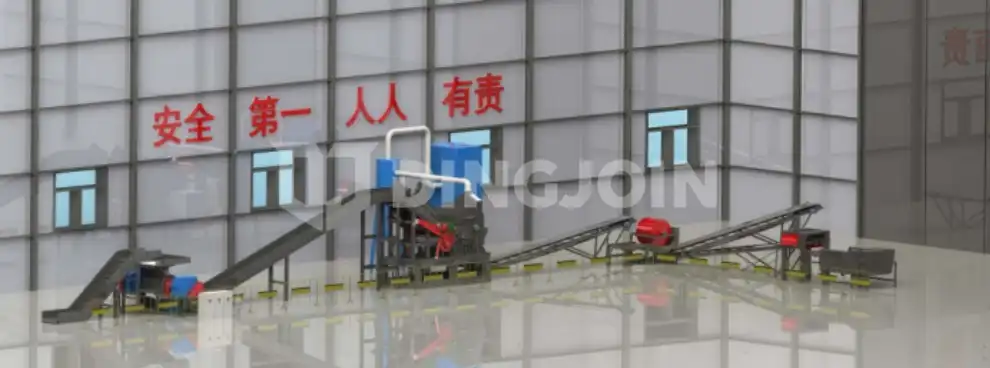
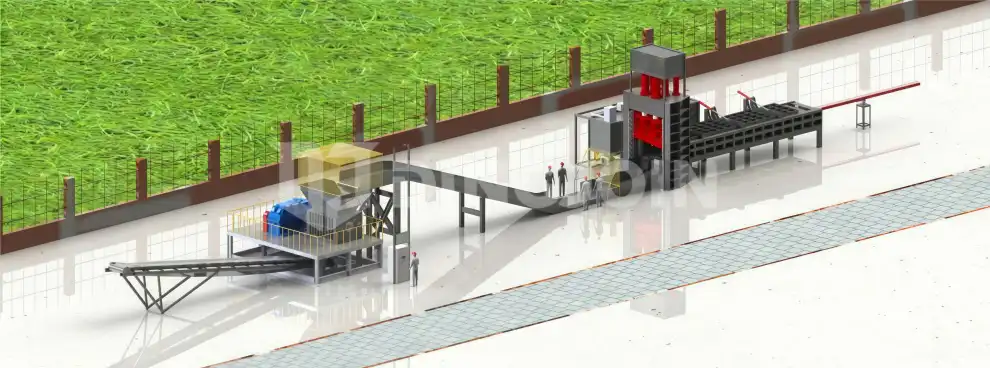
Continuous Shearing and Tearing for Disordered Rebar.
This specialized system completely replaces traditional, slow methods of processing long, tangled, bent, and bundled scrap reinforcement bars. The waste rebar is first fed into our high-force hydraulic shear to be processed into short, loose pieces, and then automatically transferred via conveyors to the sorting platform and heavy-duty rebar shredder for final, absolute size reduction.
Tower-Type Enclosed Processing with Zero Pollution.
Our advanced tower-type processing line offers a fully automated and eco-friendly system for recycling waste refrigerators and large home appliances (WEEE). By utilizing entirely physical sorting and dry crushing methods, this enclosed system produces zero hazardous gas, wastewater, or residue discharges, while achieving maximum separation rates of valuable ferrous and non-ferrous metals from plastics.
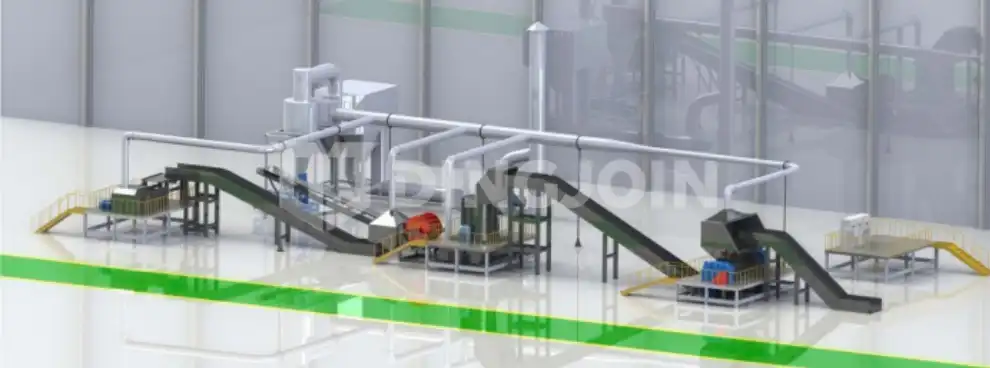
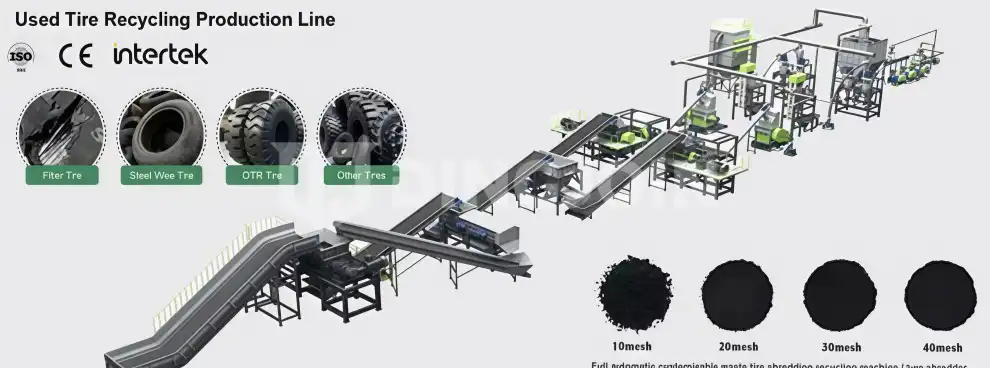
Complete Steel-Free Rubber Granules & Powder Production.
A highly automated, continuous recycling solution designed to process scrap passenger car, truck, and OTR tires into high-purity rubber granules and fine powder (ranging from 30 to 120 mesh). The system utilizes an advanced physical crushing and magnetic separation process to deliver final rubber products that are 100% free of steel wires and fibers.
Global Cases of Metal Shearing Machines
Dingjoin gantry and crocodile shears are the backbone of scrap yards, demolition contractors, and foundries around the world. Whether it is a Q91Y gantry pressing and cutting whole car shells unattended, or a DJ-EYJ crocodile shear biting through heavy rebar and structural steel, our machines deliver the charge-ready lengths that furnaces demand. With one-piece cast-steel heads, intelligent auto-stroke technology, and a direct-from-factory pricing structure, international buyers rely on our shears to retire their torch crews and bring safe, high-tonnage automation to their daily operations.